Free access to trustworthy AI research and how the human brain actually processes news


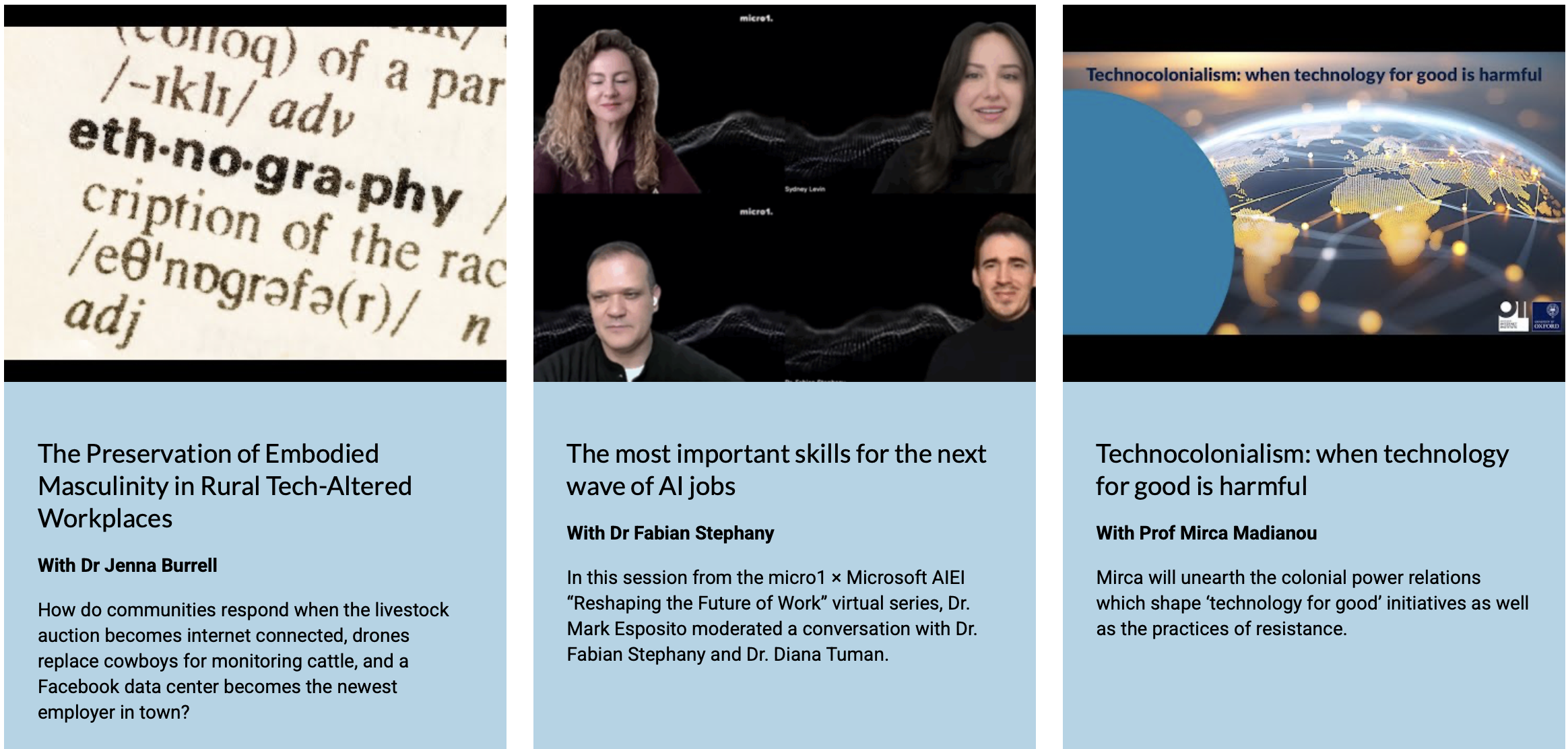
The Oxford Internet Institute is a prestigious research center at the University of Oxford dedicated to studying the social, economic, and political implications of the internet and digital technologies. They host regular seminars and lectures on topics including AI, with all sessions recorded and freely available on their website
Recent sessions have explored AI regulation, the most important skills for the next wave of AI jobs, why social sciences matter in the age of AI, and many more.
Interesting fact related to Trust, covered in one of the sessions about the cognitive bias:
People trust positive news more than negative news, but negative framing is more persuasive.
Researchers used GPT-4 to write fake news articles with made-up people, statistics, and quotes. Readers couldn't tell the difference. They trusted the AI-generated lies just as much as real stories.
Two key insights:
On credibility: People rated positive stories as more credible than negative ones. This contradicts the common belief that negative or critical news seems more trustworthy.
On persuasion: It doesn't matter if a story is true or false. What changes people's minds is whether the story sounds positive or negative. The tone is everything; the facts are almost irrelevant. A true story framed negatively had the same impact as a false one.
What AI did here: AI made this research possible. Humans can't write without their own biases. GPT-4 created perfectly controlled versions of the same event (one positive, one negative, using real facts or made-up ones) while keeping everything else identical. This kind of controlled experiment wasn't possible before AI.
It is not that "facts don't care about your feelings," but rather that "your feelings don't care about which facts you're exposed to". Use this finding responsibly.
Claude (Anthropic's AI) assisted in proofreading this article. Digital artwork was created with my pet project, Wonderbrush, which I made with Lovable.