Are You an AI User or an AI Avoider?

We’re in a strange moment with AI. Is it a creative partner, a job-stealing threat, or just a glorified search engine? We hear about it constantly, from its role in business to its quiet integration into our daily apps.
This article analyses official UK business statistics to understand how small enterprises and self-employed individuals are adapting to economic change. The article introduces ongoing research focused on supporting AI adoption among solo entrepreneurs and small businesses, helping them stay competitive in a rapidly evolving digital economy.
Key Takeaways
- UK self-employment continues to rise after the pandemic, reshaping small business dynamics.
- The gap between large and small firms underscores the need for support for AI adoption.
- New research aims to explore how individuals and businesses of different sizes and locations view AI differently.
- Learning basic “AI driving skills” can help everyone participate in the digital economy.
The Human Side of AI
Yesterday, I spent an afternoon in an artisan market, chatting with craftspeople and discovering their amazing pieces—beautiful woodwork, intricate stained glass, handmade apple juice, smoked sea salt, unique homeware, and fragrance. A wonderland of tangible pieces, things I can hold. Working in tech, where so much of our output is digital, it’s a powerful reminder of a different kind of value.
And it’s at this very intersection—between tangible craft and digital tools—that the most interesting questions about technology arise.
What UK Business Statistics Reveal About Small Enterprises
This personal encounter reflects a massive economic reality. The number of self-employed workers in the UK is growing after the COVID decline. In 2025, the UK had 4.4 million self-employed workers, both full and part-time employed, 13.5% of the workforce (0.5% higher than in Q3 2024), according to the UK’s statistics authority and summary of labour market statistics.
Q: Why are more people becoming self-employed in the UK?
Recent data from the Office for National Statistics shows a rise in self-employment after the COVID-19 decline. Many people are choosing independent or flexible work for more control, creativity, and balance.
The data paints a picture. While self-employed people make up the majority of all UK businesses, roughly 4.4 million, and account for 7.8% of total turnover, they compete with the largest enterprises, which generate 32% of total turnover (1.7 trillion), dwarfing all other sectors. This economic disparity is precisely why the AI adoption gap is such a critical challenge for the small businesses that form the backbone of the economy.
A Growing Talent Gap
The Office for National Statistics runs a vacancy survey and published recent report less than a month ago. The vacancy chart shows the pressure small businesses are under. Seeing them struggle to fill over 200,000 jobs—a hiring challenge just as big as the one corporations face—connects directly to a hypothesis I want to test.
Q: How do workforce challenges affect small businesses in the UK?
While large enterprises have more resources, smaller firms face similar hiring pressures. Using AI tools can help bridge this talent shortage.
From Horses to Cars: Understanding Disruption
When it comes to AI adoption, this means the real insights won't come from tech firms or large enterprises. They may come from solo and small-sized business owners, including artists, creators, and individuals navigating this change. The gap between those who leverage AI and those who don't is widening, and understanding why is critical.
I believe we're in a disruptive moment with AI, and I need more data to understand the real-world challenges small business owners and employees are facing right now. It reminds me of my favourite analogy, which I covered in one of my previous articles, "New Driving Skills": the shift from horses to cars.
Horses were once vital for everything, in work and personal life. When cars came along, people had to learn completely new driving skills. Those new skills, in turn, unlocked new opportunities—not just for business, like producing and delivering goods faster, but for personal life, like travelling.
I saw an interesting post on one of the craftspeople's Instagram profiles yesterday, making the case for supporting small businesses by buying from them rather than big retailers. That’s so true. Small businesses thrive on that direct support, especially since it’s almost impossible for them to compete on price.
This is where AI could make things even tougher. Large companies are likely to integrate AI into their processes faster, widening the gap in both price and consumer perception. This will likely make it even harder for small businesses to keep up.
Have Your Say: A New Survey on AI Adoption
As part of my research at Oxford, I’ve launched a survey to explore exactly this. It's not about the tech itself, but about people's perspectives on it.
- How does it affect professional life, personal life, and daily tasks?
- How ready are businesses of different sizes and individuals to invest in AI tools or educational materials, and what is important when choosing a tech consultancy?
- How do businesses integrate AI into customer-facing activities?
AI adoption refers to how individuals and organisations integrate artificial intelligence tools into their daily work and decision-making processes.
A key goal of my research is to gauge opinions across both work and personal life dimensions. Even if someone feels AI is completely irrelevant to their work or life, that perspective is just as important.
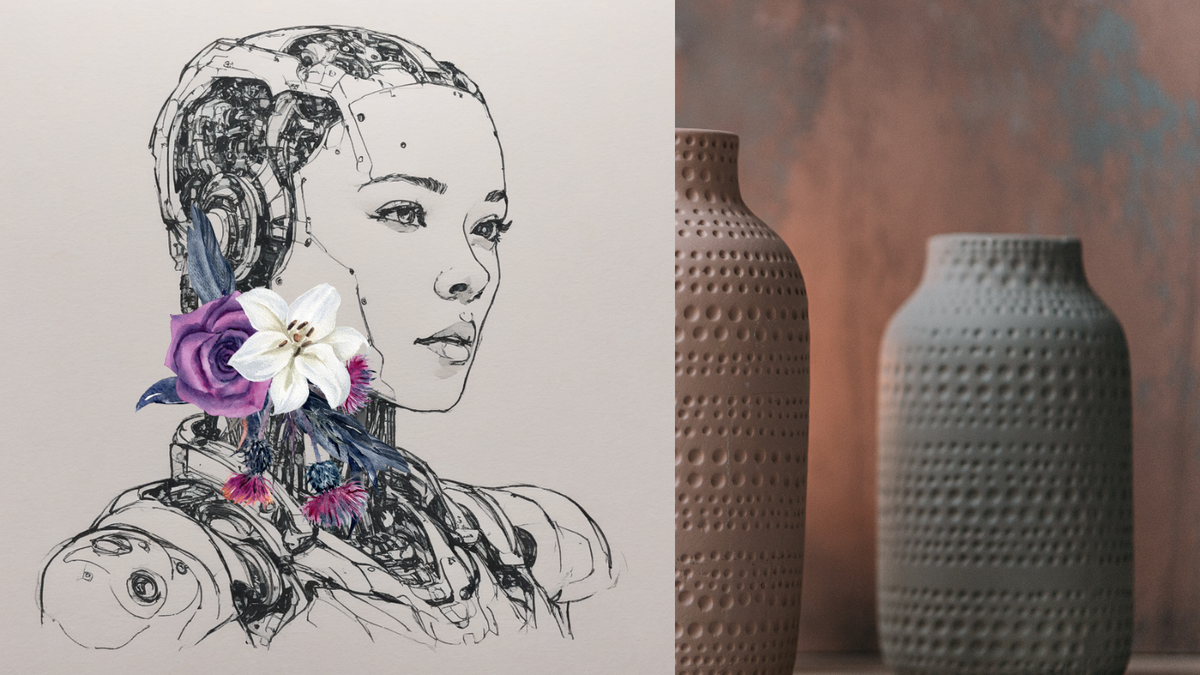
I don't want a bot chatting to me at the artisan market, of course, even if it wears a beautiful head-dress of flowers and feathers to look prettier,
...but I do believe smart AI tool use can help self-employed and small businesses automate routine queries or keep pace with new knowledge in their fields. This, in turn, allows humans to focus on the most interesting part of the work—the creation of new products, services, and innovations.
Thinking back to the car analogy, when people adopted those new driving skills, it wasn't just for work. Everyone who had the resources learned—students, workers, business owners, retirees, and families—because it was useful for all parts of life. The crucial difference today is that the cost of a car was a massive barrier. In contrast, the cost of many powerful AI tools for professional and personal use is incomparably lower, making these new "AI driving skills" potentially even more universal and accessible to everyone.
The survey is completely anonymous, open to everyone, and takes about 10 minutes. Your insights would be a massive help in understanding where we stand:
Q: What is the goal of this AI adoption survey?
This survey examines how AI affects business adoption, professional skills, and career development, as well as its impact on personal lives and daily tasks.
Q: Can I share my views on AI from both work and personal perspectives?
Yes. The survey is designed so you can provide feedback on AI in a professional context, a personal context, or both — whichever feels most relevant to your experience.
Q: Who can take part in the research?
Anyone over 18, whether they run a business, work in an organisation, or use AI at home. Each perspective helps reveal how ready the public is to learn and adopt new digital skills.
Q: Can I take part if AI feels irrelevant to me?
Yes. That perspective is just as valuable to the research, as it helps understand not only how people use AI but also why some choose not to.
Q: Can I share this survey with my friends?
Yes, since this research covers both business and personal contexts, I'd be very grateful if you could share this link with anyone you know (adults) who might be interested in participating, such as small, medium, or large business owners or employees, friends or family.

Moving Forward: Supporting Small Businesses in the AI Era
As technology continues to evolve, everyone — from curious individuals to small business owners — deserves practical, human-centred support to understand and benefit from AI. Through my work at TheCuriosity.ai, I focus on education, accessibility, and confidence-building, helping people turn AI from a source of uncertainty into a tool for learning, creativity, and meaningful growth.
At TheCuriosity.ai, I help individuals and small businesses turn curiosity about AI into practical skills for growth and innovation. To make AI learning more approachable, I offer interactive AI education sessions for individuals, teams, and small businesses.
 Vira Larina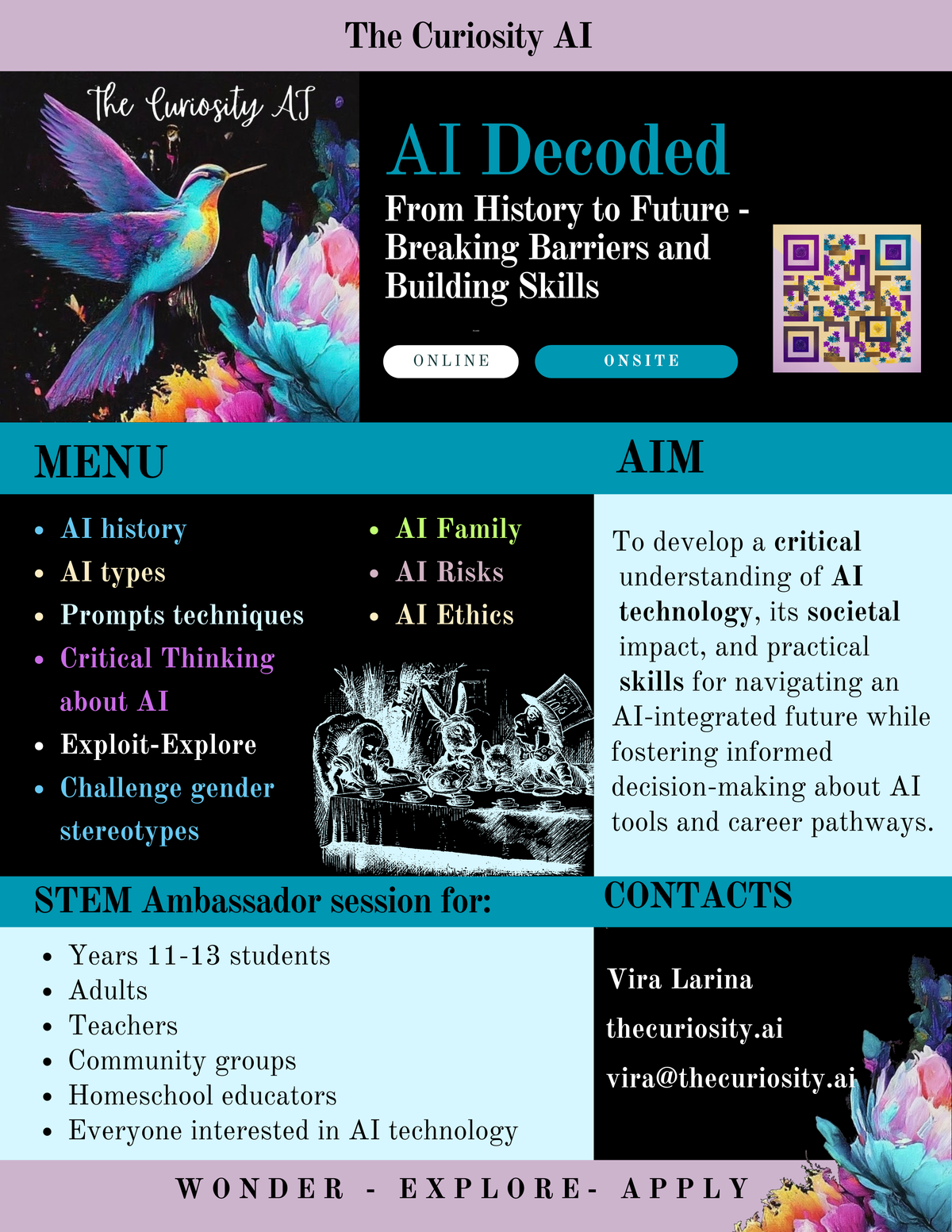
 Vira Larina
 Vira Larina
FAQ: Tools Used in Creating This Article
Q: Which AI tools were used to prepare this article?
I used several AI tools to support the creative and editorial process — Gemini Pro for narrative flow, Grammarly Premium for tone and clarity, and Pixel Lineart to generate the illustrations that appear throughout the article.
Q: How did Gemini Pro contribute to the writing process?
Gemini Pro helped refine the structure by suggesting the artisan market story move to the beginning. This made the narrative flow more natural and engaging for readers.
Q: Why did you pause using Claude?
After two years of using Claude, I paused my subscription to compare it with new alternatives like Gemini Pro. The goal was to evaluate how different AI systems handle storytelling and contextual understanding.
Q: How was Grammarly Premium used?
Grammarly Premium was used to review tone and readability, ensuring the article feels approachable and balanced between analytical and conversational.
Q: What tool was used to create the visuals?
Pixel Lineart was used to generate the main illustration — the “AI lady” — featured in all images across this article. It added a visual identity that connects technology and creativity.
How do you personally feel about using AI in your work or daily life — are you an adopter, a sceptic, or somewhere in between?