AI or human: who do you want on the other end?


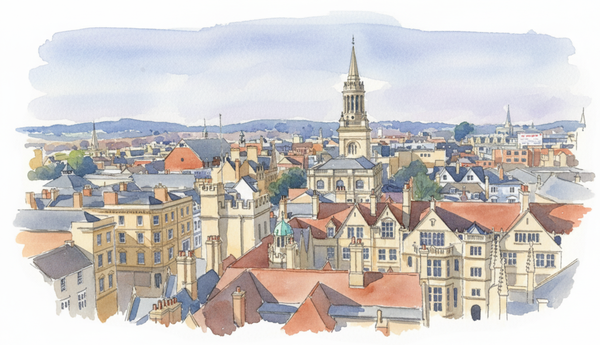
The more I study, work with AI, and explore it, the more I question it. I decided to apply to Oxford's AI for Business Diploma to find answers to my questions, and posted on LinkedIn in November 2024:
When I was recently exploring the ancient Greek heritage, dated 3-10 centuries BC, I kept asking myself – how come human beings were able to build such marvels 30 centuries ago, and why, having made such progress in those days, are we still where we are? That's definitely unused human potential. Why is it lost? Why haven't we accelerated it using its compound benefits? From the wisdom of ancient Greece to the Renaissance genius of Leonardo da Vinci, from Galileo's revolutionary ideas to the transformative Industrial Revolution, humanity has shown an incredible capacity for innovation and progress. Yet, it seems we've only scratched the surface of our potential. Fast forward to the 20th century: the birth of AI, which started with Alan Turing, whose foundational work in computer science brought the innovative idea that machines could think. Today, AI is all around us – its global market size has a 24% compound annual growth rate. It is expected to reach 826 billion USD by 2030, and it is the human responsibility to regulate it so we can innovate sustainably. While AI overcomes humans at pattern recognition within defined parameters, genuine creativity and challenging existing knowledge is still a human advantage.
"Imagination is more important than knowledge. Knowledge is limited. Imagination encircles the world," said Albert Einstein. AI does have knowledge, but does it have imagination? I'll explore this question next year at Saïd Business School, University of Oxford.

On the first lecture day, we were told: don't expect answers from us, you will have to find them yourself 😄. "Stuff and nonsense!" (this is from Alice in Wonderland). One question I'm exploring both academically and professionally is the rise of AI assistants. Part of my role involves managing the implementation of AI-powered solutions for our clients – so this isn't just theoretical curiosity; it's something I navigate daily. The numbers tell a compelling story:
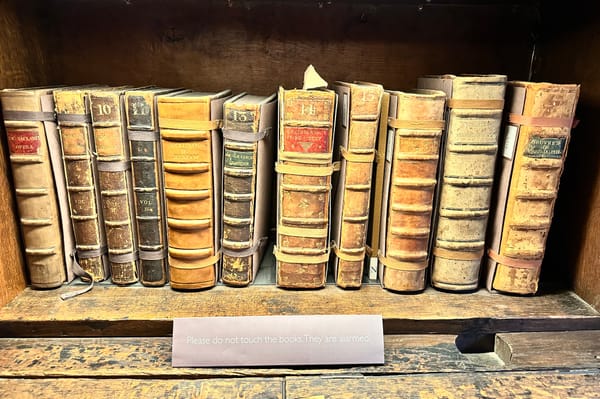
According to Gartner, by 2028, 50% of customer service organisations will have adopted AI agents to enhance self-service capabilities. By 2029, these agents are expected to autonomously resolve 80% of common issues without human intervention, potentially leading to a 30% reduction in operational costs. Meanwhile, users remain concerned about these augmented and automated workflows, and "Very British Problems" described it perfectly:
Still, my recent experience with Amazon proved that human support isn't perfect either; in that moment, I was ready for fully automated AI assistance. My query was simple: I needed to fix an issue with adding a member to Prime Family, and I cycled through three different human agents. While I was busy explaining and copy-pasting my query, I ended up fixing the issue myself.
Several days later, I received a call from my dentist's practice about rescheduling an appointment. I was in the middle of nowhere, on a tiny road between fields somewhere between York and Harrogate, with obviously poor mobile connection. I had one very important task: to hear what I was told and not miss when my next appointment was. I was so lucky it was a human who called me and patiently repeated the day and time until I got it.
Two experiences, two very different outcomes. Perhaps the real skill we'll need isn't choosing between AI and humans, but building systems smart enough to predict who, or what, should call us on a tiny road between York and Harrogate with a bad signal.

This article was crafted with assistance from Claude (Anthropic's AI) and Grammarly Premium. The content, experiences, and insights are based on my personal journey at Oxford, while AI tools assisted with proofreading, language refinement, and structural suggestions. Artwork is created with my pet project Wonderbrush, which I created with Lovable, and a song with Suno Pro, v.5.